
1. Introduction
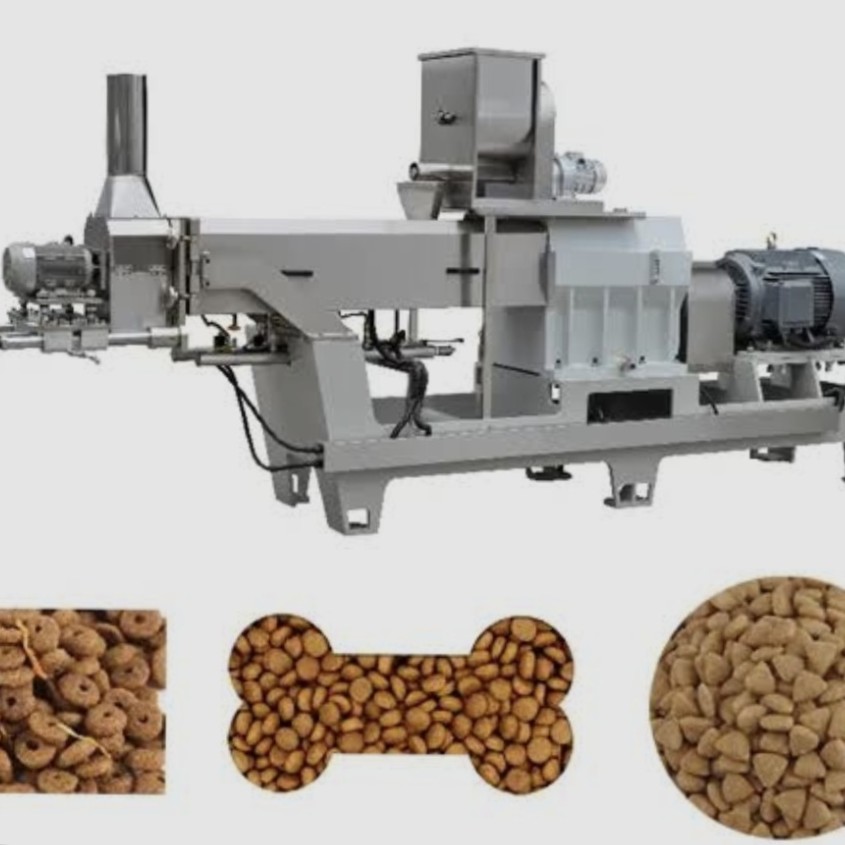
The Automatic Dog Feed Making Machine Plant—also known as the pet food production line—enables large-scale, efficient manufacturing of dry dog food pellets. These systems transform raw materials into shaped, nutritionally complete kibble using high automation levels and versatile equipment configurations. Such plants are increasingly popular among dog food manufacturers looking for consistent quality, reduced labor, and scalable operations.
---
2. Core Workflow of a Typical Production Line
Most automatic pet food plants follow a standard flowchart:
Mixer: Combines raw ingredients uniformly, ensuring consistency and preventing leakage.
Screw or Conveyor: Transfers mixed material to the extruder.
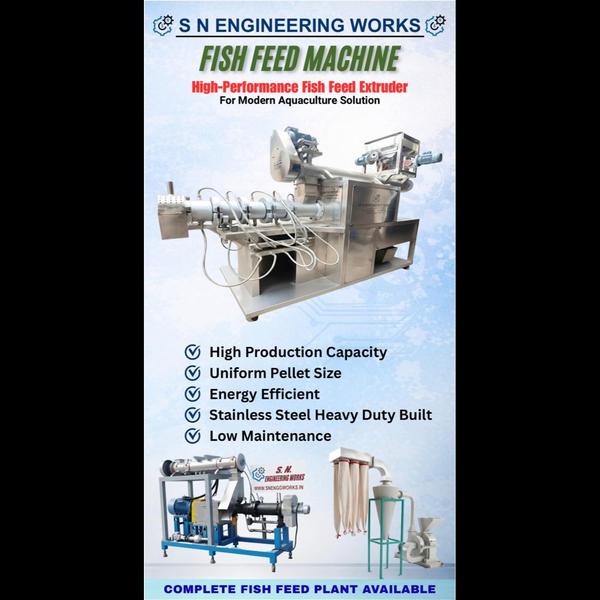
Double‑Screw Extruder: Applies heat and pressure to cook and extrude the mixture through shaping dies.
Air Conveyor or Hoister: Moves extruded product to the drying section.
Dryer (Oven): Reduces moisture content to improve shelf life (via electrical, steam, gas, or diesel heat).
Flavoring Machine: Applies oil and flavors to enhance taste and preserve kibble.
Cooling Conveyor: Lowers temperature before packaging.
Packing System: Bags or boxes the final product.
---
3. Key Equipment Components & Technical Specs
A. Mixer & Pre‑Conditioner
Mixers—available in vertical or horizontal types—handle 20 to 500 kg per batch with 3 kW to 7.5 kW motors .
Pre‑conditioners (double‑shaft) condition raw materials before extrusion, improving texture and throughput .
B. Extruder
Twin-Screw Extruders (models like LY65–LY135, DSE‑65–DSE‑130) cook and shape dough through high pressure and temperature. Power ratings span approximately 70 kW up to 280 kW, with outputs from ~120–160 kg/h to several tons/hr (up to 3,500 kg/hr) .
C. Dryer
Available in electrical, steam, gas, or diesel-fired variants.
Size and capacity range from small models (100 kg/h) to large industrial dryers handling up to 10 ton/h .
D. Flavoring & Oil Coating Systems
Uniformly coat kibble with oils and flavoring agents. Features include single or double drums, ensuring even application at rates from 100 kg/h to multi-ton capacities .
E. Auxiliary Systems
Air Conveyors, Hoisters, Cooling Conveyors: Transport product between stages.
Packaging Units: Automated bagging or bulk storage interfaces for finished kibble .
---
4. Plant Capacity & Model Range Examples
Loyal Machines: Output 120–2,000 kg/h with models from LY65 to KING135 .
High‑Speed Lines: PFE‑65‑1 to PFE‑95‑2 delivering 120–1,500 kg/h .
HIMAX: Capacities ranging from 100 to 10,000 kg/h .
Chinese OEM Lines:
SLG series: 100–2 ton/h output with 95–230 kW power draw .
Sunrising (via BestSuppliers): SR65–SR132 models, handling 100 kg/h up to 7 ton/h with 22 kW to 250 kW motors .
ChenYang: 100–7,000 kg/h capacities with pre‑conditioners, gas/electric drying, and robust extruders .
GoldSupplier lines: 150 kg/h to 1 ton/h options with varied shapes and fully automatic configuration .
MT series: MT65–MT70 extruder lines at 120–250 kg/h capacity, compact footprint .
---
5. Automation & Operational Features
Automated control via PLCs, frequency drives, self‑cleaning screws, and auto‑temperature regulation ensure precise, reliable operation .
Many systems include turnkey services like installation, staff training, troubleshooting, and spare parts provisions .
High hygiene and food-safety standards: food-contact parts are stainless steel, and systems support easy sanitation .
---
6. Raw Materials & Product Flexibility
Raw ingredients include plant-based flours (corn, wheat, rice, soy) and animal proteins (fish meal, chicken meal, bone meal, meat powder) .
Final kibble can be shaped—round, bone-shaped, etc.—via die modulation within the extruder .
Systems accommodate multiple pet-feed types—dog, cat, fish, bird—by adjusting formulas .